Certa.
FIRE
GAS
ELEC
WATER
ASBT
LIFTS
Certa.
Compliance as an operating system. The statutory obligations every property carries, turned into a schedule that keeps itself.
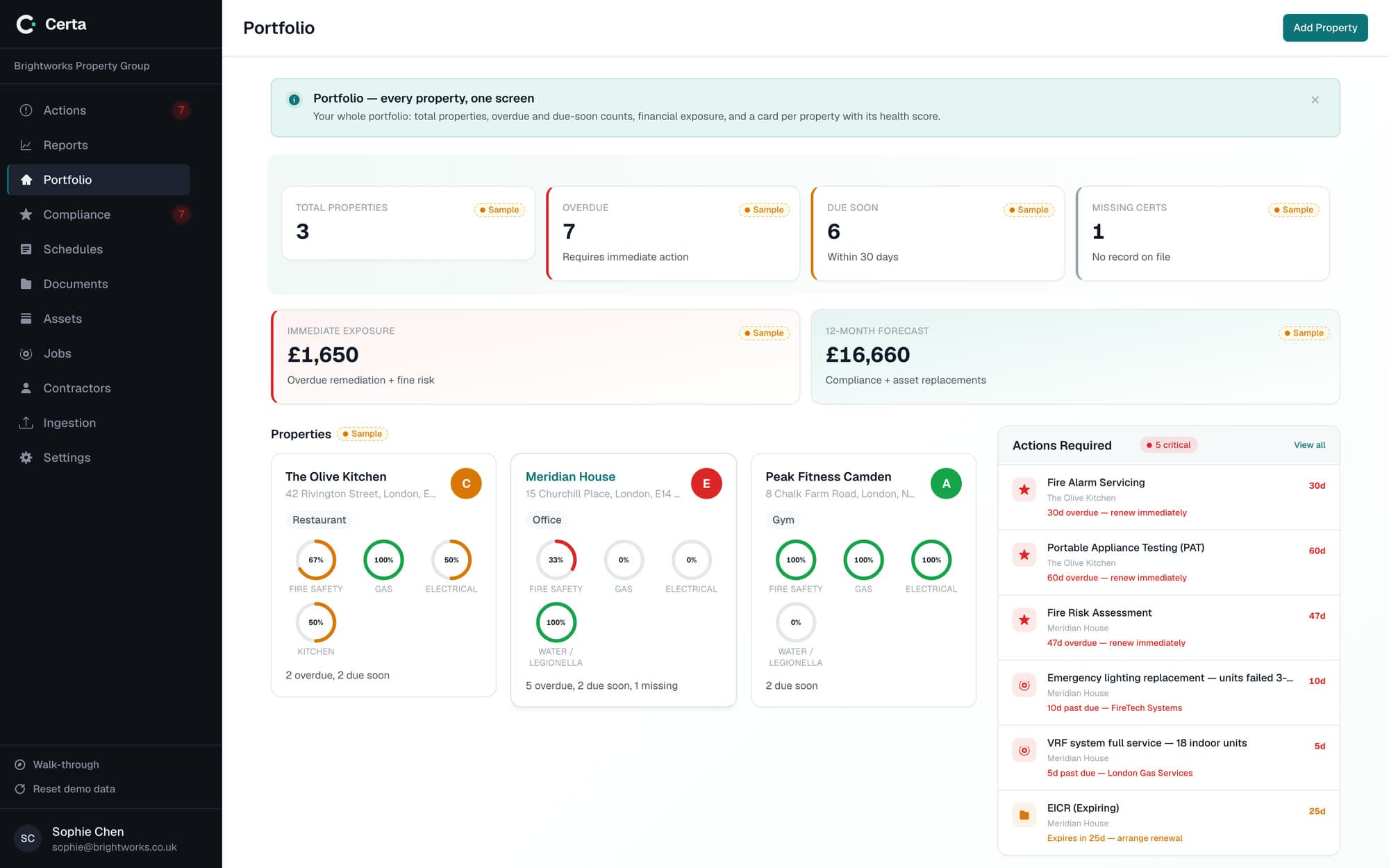
Every commercial property in the UK carries a set of legal obligations it cannot opt out of — fire, gas, electrical, water, asbestos, lifts. Miss one and the exposure is not abstract: fines, void insurance, a building you can no longer legally operate. Most operators track this in spreadsheets and memory. Certa turns it into a system.
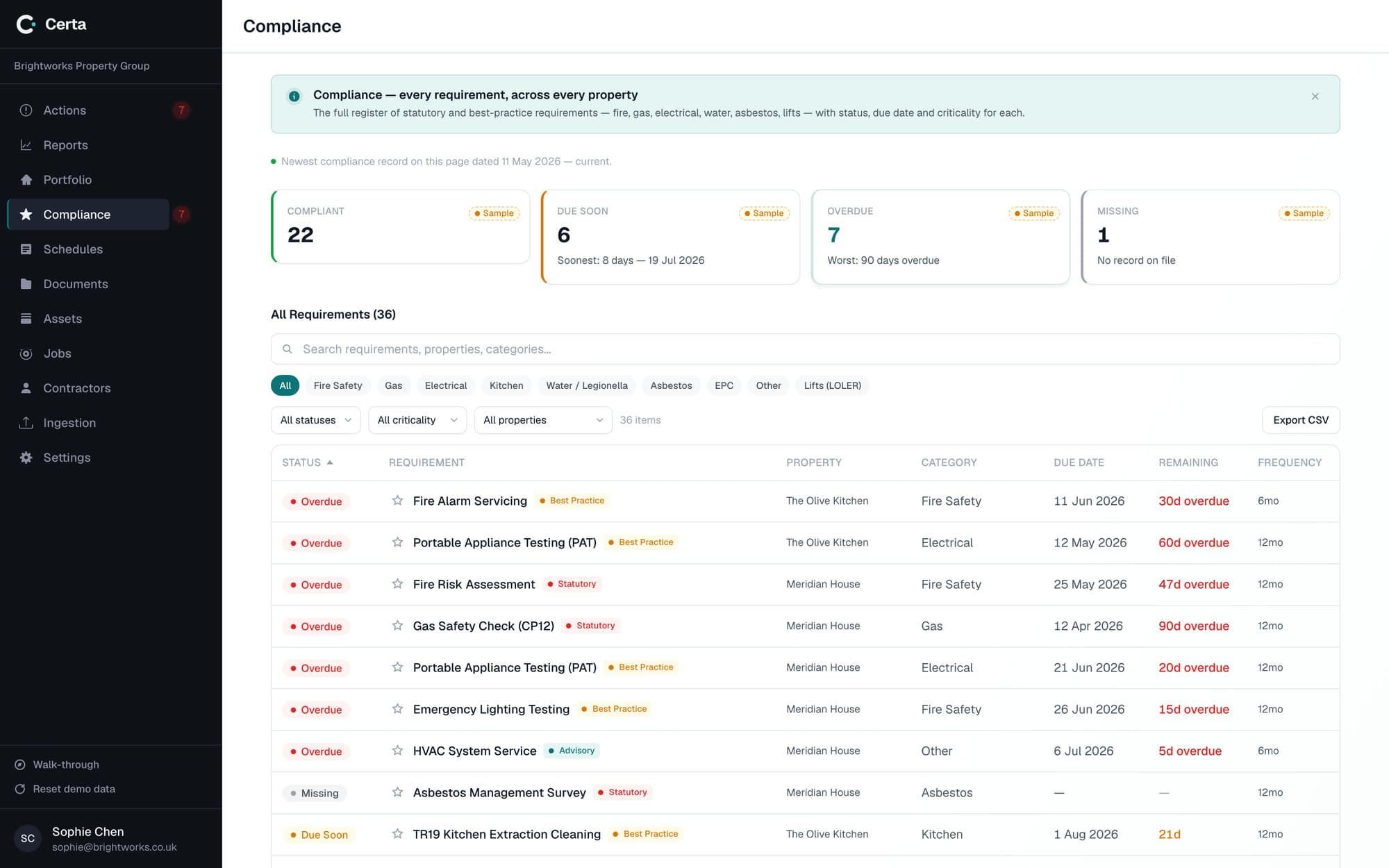
Describe a property — its sector, its services, what it contains — and Certa generates the exact compliance schedule the law requires for it. Automated schedule generation, not templates. The system reads the property profile and produces the obligations, frequencies, and deadlines that apply to it specifically, each one carrying its legislation reference and the plain-English cost of ignoring it.
It recently crossed the line that matters: from polished demo to working software, in one overnight run. Real accounts, per-organisation data isolation enforced at the database layer, real document storage, contractor and share portals on secure time-limited links, a reminder engine that chases what’s coming due. The demo below is public; the working product now exists behind it.
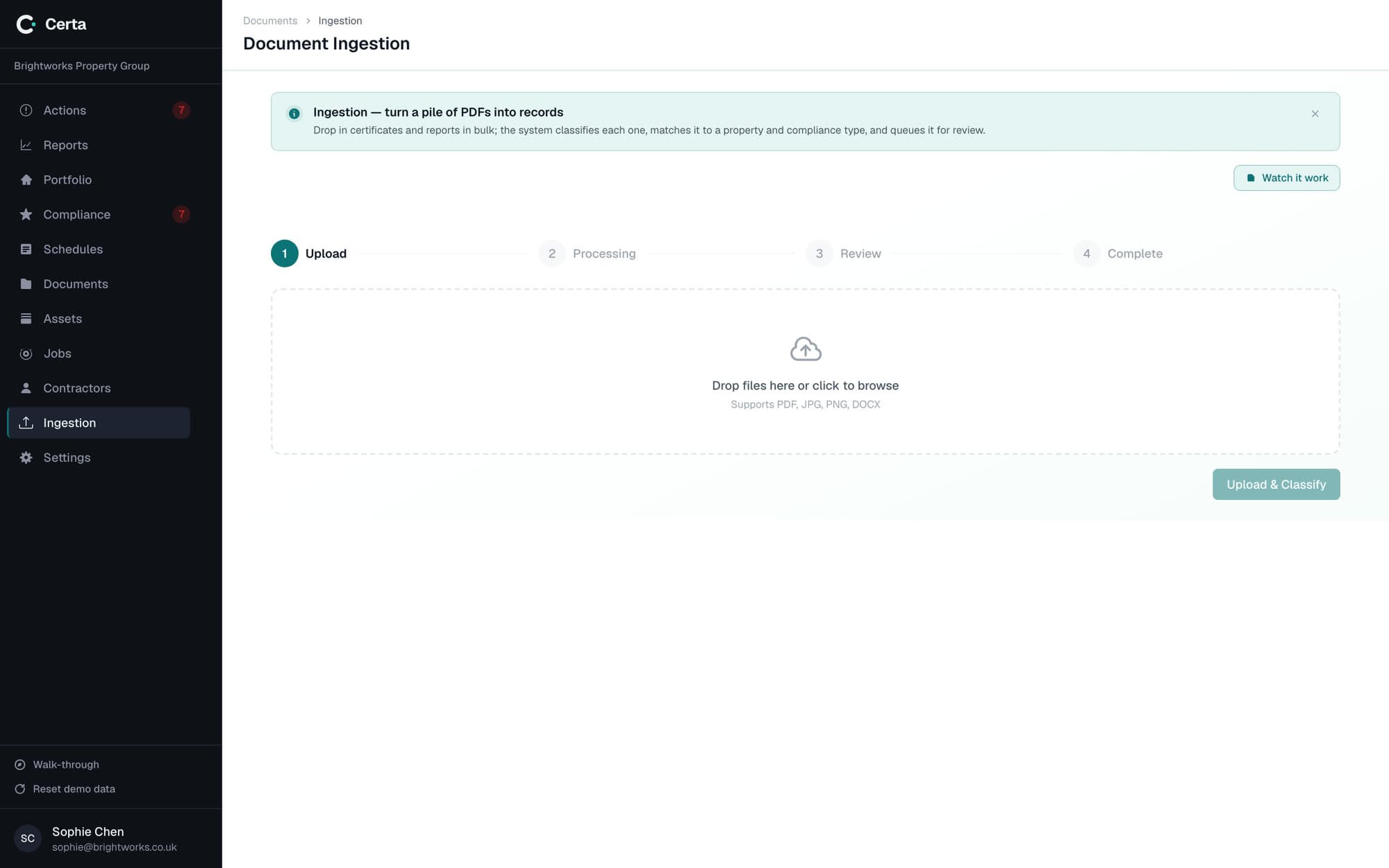
The newest piece is ingestion. Drop a pile of certificates on it — gas checks, electrical reports, fire risk assessments — and an AI vision pass classifies each document and extracts the fields that matter: issue date, next due, contractor, outcome, remedial actions. On our own evaluation harness it classifies at 94% — measured against ground truth, not a vendor benchmark. Every extracted field carries a confidence score, and nothing is filed against a compliance record without a human confirming it. That is the only AI in the product, and it is deliberate: the risk forecasting and recommendations stay rules-based and auditable, because a number you cannot trace is a number you cannot defend.
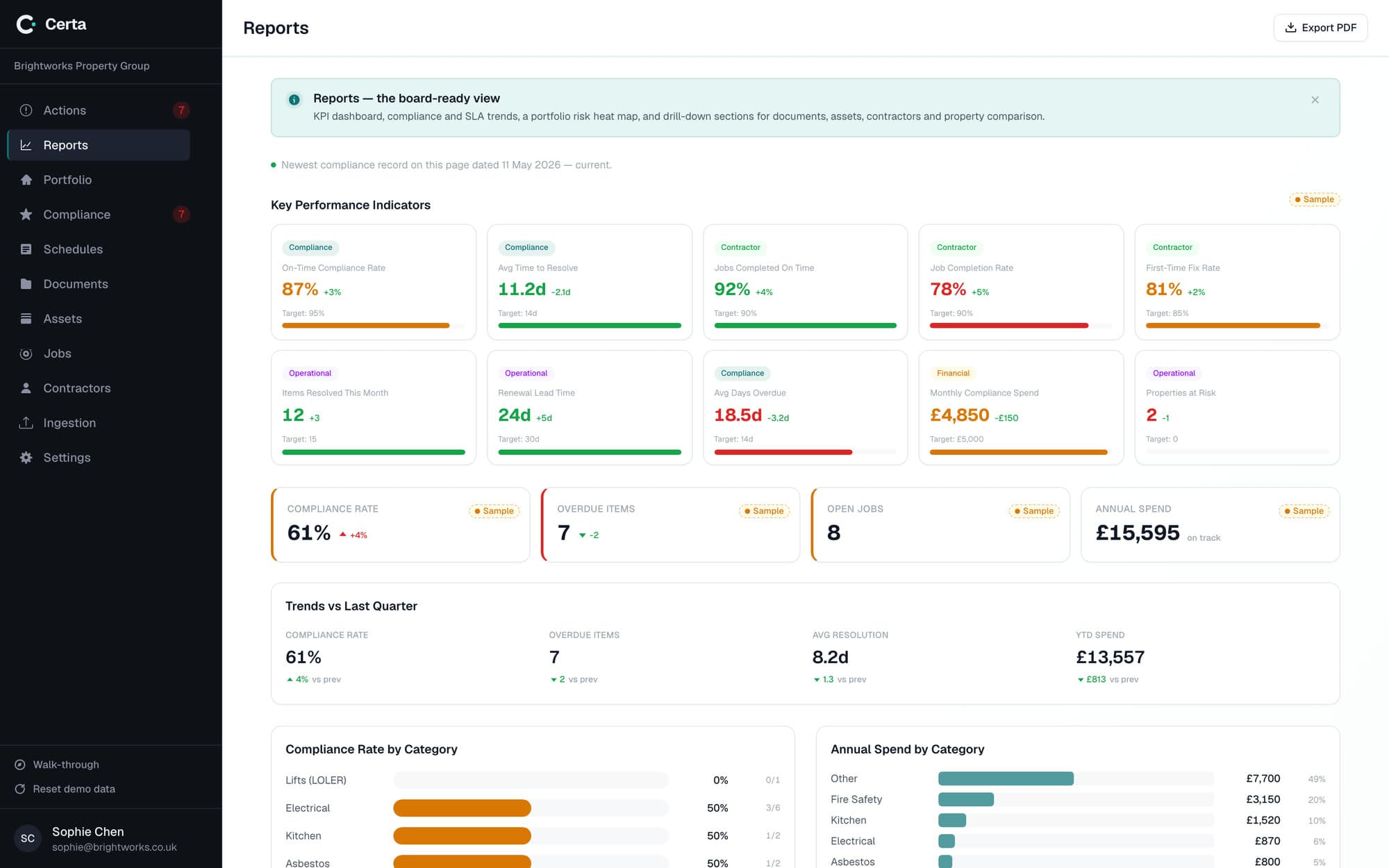
Risk forecasting puts a pound figure on falling out of compliance — statutory fine, insurance exposure, asset cost — as transparent arithmetic, shown working. Reporting tracks compliance health by category, spend, SLA adherence, and contractor performance, exportable for the board.
Co-founded with someone who lives the problem — he runs a maintenance company, so the compliance burden is his daily reality. He brings the domain and the route to market, through facilities-management operators who feel the same pain. The product, end to end, is mine. Next.js and Supabase, with isolation from the first migration.